
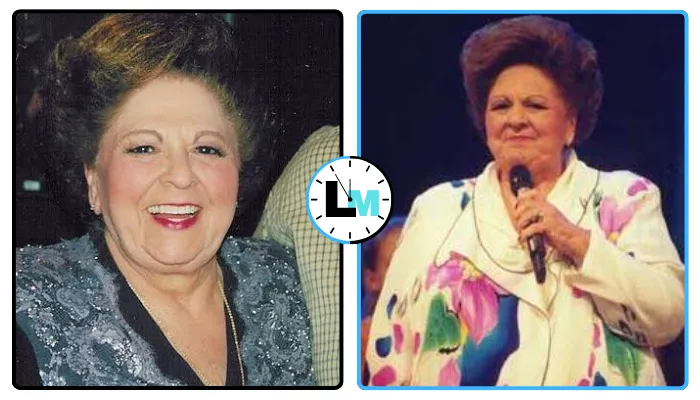

Vestal Goodman: The Queen of Southern Gospel Music
If you close your eyes and think of Southern Gospel music, the voice you hear is probably hers. A contralto of extraordinary power, Vestal Goodman could fill a tent without a microphone and command a stage with a single hand raised. For more than half a century, she was the matriarch of The Happy Goodman Family, the genre’s first family, and a pioneer who helped take gospel music from church basements to national television. She was called the “Queen of Southern Gospel Music,” and the title was earned. This is the story of Vestal Goodman, a woman whose voice and faith defined an era.
Quick Facts
| Attribute | Details |
|---|---|
| Full Name | Vestal Freeman Goodman |
| Born | December 13, 1929, in Fyffe, Alabama |
| Died | December 27, 2003, in Celebration, Florida (aged 74) |
| Nationality | American |
| Known For | Southern Gospel singer; matriarch of The Happy Goodman Family |
| Occupation | Gospel singer, evangelist |
| Years Active | 1949–2003 |
| Spouse | Howard “Happy” Goodman (m. 1949; died 2002) |
| Children | Rick Goodman, Vicki Goodman |
Early Life
Vestal Freeman was born on December 13, 1929, in Fyffe, Alabama, a small town in DeKalb County in the Sand Mountain region. She was the fourth of six children born to Gordie Moses Freeman, a barber, and Mae Bell Hicks Freeman. She was named in honor of her mother’s best friend. Her first name, “Vestal,” was a common name in the rural South at the time, evoking purity and devotion.
She grew up singing in a Church of God congregation, where her powerful voice became evident at a young age. But her original ambition was not gospel music. She dreamed of a career as an opera singer. She began studying voice at age 13 or 14 and received training from her older brother Claris “Cat” Freeman, who sang with some of the top male gospel groups of the era, including the Oak Ridge Quartet (later the Oak Ridge Boys). She also attended church-sponsored singing schools. She and her younger sisters won singing contests as The Freeman Trio, and she performed with two church friends in the Highway Church of God Trio.
Her life changed at sixteen when she met evangelist Willie Howard “Happy” Goodman at a tent revival in Albertville, Alabama, in 1945. At the time, Howard was affiliated with a radio ministry on WSGN in Birmingham. He managed The Happy Goodman Family, a gospel group that included his seven siblings.
Career
The Happy Goodman Family
Vestal married Howard Goodman on November 7, 1949, in Fulton, Mississippi. He was nine years her senior and a preacher. The couple had two children: a son, Rick, and a daughter, Vicki.
After their marriage, Vestal became a regular member of The Happy Goodman Family. In April 1957, Vestal and Howard moved to Madisonville, Kentucky, to conduct a series of revival services. During a revival meeting in Louisiana, a hurricane destroyed their tent and sound equipment. It was then that Vestal started singing without amplification. She later shared how this experience made her aware that God had given her a voice that could carry His message without a microphone.
After the Goodmans returned to Madisonville in December 1957, Howard and Vestal founded Life Temple Church, which Howard led until 1984. The family also established a recording studio and formed a music publishing company.
Starting in the early 1960s, Vestal, Howard, and his brother Sam performed at revivals and churches as a trio. In 1960, the Goodmans were among the original performers on The Gospel Singing Jubilee, a popular syndicated television show that was a pioneer in gospel music broadcasting. Eventually, Rusty Goodman also moved to Madisonville, and the four began performing as The Happy Goodmans. By 1962, The Happy Goodmans had a weekly television program.
With the formation of Word Records in the early 1960s, Vestal and The Happy Goodman Family became the flagship artists signed to the company. Their sound was characterized by impeccable family harmonies, Howard’s emcee skills, and Vestal’s powerful, emotional contralto.
A Historic Career
Vestal Goodman’s list of accomplishments is remarkable. In 1968, The Happy Goodmans won the first Grammy Award ever given to a gospel group for “The Happy Gospel of the Happy Goodmans”. In 1969, Vestal won the first-ever Female Vocalist of the Year Dove Award. The group charted 15 No. 1 hit songs on gospel charts, including “I Wouldn’t Take Nothin’ for My Journey Now,” and performed in more than 3,500 concerts. They also won multiple Grammy and Dove awards.
In 1971, Vestal released her first solo album, Hallelujah!, from which came the well-known single “It’ll All Be Over But the Shoutin’.”
In the mid-1980s, the Goodmans became regulars on Jim and Tammy Faye Bakker’s “PTL Club,” which brought them to a new audience. In the 1990s, Vestal became a staple of the Gaither Homecoming video series, appearing in over 60 productions that revitalized interest in traditional gospel music. Her collaborations spanned genres, including duets with country artists like Dolly Parton, Hank Williams Jr., and George Jones. George Jones credited her with his spiritual conversion.
Books and Autobiography
Vestal published her autobiography, Vestal! “Lord I Wouldn’t Take Nothin’ For My Journey Now,” in 1998 (some sources say 1999). The book details her life in Southern gospel music, her heart problems, her subsequent bout with cancer, and her struggle with prescription drug addiction. It was a candid and inspiring account of a life lived in the public eye.
Major Achievements
- First Grammy Award to a gospel group: 1968, for “The Happy Gospel of the Happy Goodmans”
- First Female Vocalist of the Year Dove Award: 1969
- Grammy Award for Best Gospel Performance: 1978
- Gospel Music Hall of Fame: Inducted with The Happy Goodmans in 1998
- Gospel Music Hall of Fame: Inducted individually in 2004
- 15 No. 1 gospel hits: Including “I Wouldn’t Take Nothin’ for My Journey Now”
- Over 3,500 concerts: Performed worldwide, including at Billy Graham Crusades and the White House for President Jimmy Carter and First Lady Rosalynn Carter
- Gold status music videos: Three of her music videos achieved gold status
- Alabama State Council on the Arts Hall of Honor Special Award: First gospel artist to receive this honor
Business Ventures
No reliable public information is available on this.
Public Image
Vestal Goodman was, and remains, one of the most beloved figures in gospel music history. She was known for her warmth, her humor, and her unshakeable faith. Her voice was a force of nature, capable of both tender vulnerability and roof-raising power. She was a mentor to younger artists and a beacon of hope to her fans.
She was also open about her personal struggles, including her addiction to prescription drugs and her battles with heart problems and cancer. Her willingness to share her pain made her even more relatable and admired.
As she once said, “I want it remembered that I loved singing about Jesus and it’s happiness.” That sentiment, simple and sincere, captures the essence of her ministry.
Personal Life
Vestal was married to Howard “Happy” Goodman from 1949 until his death in 2002. They had two children, Rick and Vicki. The couple pastored churches and sang for congregations across the country, building a life and ministry together that spanned more than five decades.
Howard died in 2002, just over a year before Vestal’s own passing. She died on December 27, 2003, in Celebration, Florida, while visiting family members during the Christmas holidays. She was 74 years old. Reports indicated she had been ill with the flu and her condition worsened.
Net Worth (Estimated)
Publicly available estimates of Vestal Goodman’s net worth vary. One source estimates her net worth at approximately $3 million at the time of her death in 2003.
That figure is based on her long career in gospel music, including record sales, touring, book royalties, and television appearances. While Southern Gospel is a niche genre and does not generate the kind of wealth associated with mainstream pop or rock music, Goodman’s career spanned more than five decades and she was one of the genre’s most successful and recognizable artists.
Her income sources included:
- Record sales: 15 No. 1 gospel hits and numerous albums
- Touring: Over 3,500 concerts
- Book royalties: Her autobiography, Vestal!
- Television appearances: The Gospel Singing Jubilee, PTL Club, Gaither Homecoming videos
- Music publishing: The family’s publishing company
It is important to note that no audited financial records are publicly available, and this figure should be treated as an estimate.
Editor’s Note: Net worth figures are estimates compiled from publicly available sources and may vary depending on methodology. Late Magazine does not have access to private financial records and does not present these figures as confirmed or audited.
Interesting Facts
- Opera dreams: She originally wanted to be an opera singer before dedicating her life to gospel music
- No microphone needed: After a hurricane destroyed her tent and sound equipment, she discovered her voice could carry without amplification
- First female vocalist Dove Award: She won the first-ever Female Vocalist of the Year Dove Award in 1969
- First gospel Grammy: The Happy Goodmans won the first Grammy ever given to a gospel group
- White House performance: She performed for President Jimmy Carter and First Lady Rosalynn Carter
- George Jones conversion: George Jones credited her with his spiritual conversion
- Gaither Homecoming: She appeared in over 60 Gaither Homecoming productions
Legacy
Vestal Goodman’s legacy is written in the lives she touched and the music she left behind. She was a pioneer who helped build the foundation of Southern Gospel music, a genre that continues to thrive today. She was a mentor to countless younger artists and a matriarch to her family and her musical family.
Her voice, a contralto of extraordinary power and emotion, remains one of the most distinctive in gospel music history. Her recordings continue to inspire new generations of listeners. And her faith, unwavering and infectious, continues to resonate.
She was inducted into the Gospel Music Association Hall of Fame twice: once with her family in 1998 and again individually in 2004, a testament to her singular impact. She was the first gospel artist to receive the Alabama State Council on the Arts Hall of Honor Special Award.
As she said, “I want it remembered that I loved singing about Jesus and it’s happiness.” That is exactly how she will be remembered.
Frequently Asked Questions
Who was Vestal Goodman?
Vestal Goodman was an American Southern Gospel singer known as the “Queen of Gospel Music.” She was a member of The Happy Goodman Family and had a career that spanned more than 50 years.
What was Vestal Goodman’s net worth?
Publicly available estimates suggest her net worth was approximately $3 million at the time of her death in 2003.
How did Vestal Goodman die?
She died on December 27, 2003, in Celebration, Florida, at the age of 74. She had been ill with the flu.
Was Vestal Goodman married?
Yes. She was married to Howard “Happy” Goodman from 1949 until his death in 2002. They had two children, Rick and Vicki.
What was Vestal Goodman’s biggest hit?
Her signature song was “I Wouldn’t Take Nothin’ for My Journey Now.” She also released “It’ll All Be Over But the Shoutin'” from her first solo album.
Was Vestal Goodman in the Gaither Homecoming videos?
Yes. She appeared in over 60 Gaither Homecoming productions in the 1990s.
Read More: Little Walter Net Worth: Blues Legend’s Tragic End