

What Is GizmoCrunch, Exactly?
If you’ve searched gizmocrunch and landed here, you’re probably not looking for a product or a how-to. You’re trying to figure out what the name actually refers to, because the search results are messy. That’s a fair reaction. The gizmocrunch ecosystem is genuinely confusing right now, and untangling it is more useful than repeating vague marketing copy about “your daily source for tech news.”
The original site, gizmocrunch.com, describes itself on its own About page as a project born out of a shared interest in gadgets and the technology behind them, started by a small group of friends rather than a media company. It publishes across categories like Internet, Apps, Fix (troubleshooting), Alternatives, Guides, Gaming, and Business, structured like a typical independent WordPress tech blog rather than a newsroom with bylined reporters.
That’s the important baseline fact: GizmoCrunch is not a household-name outlet like TechCrunch, The Verge, or Ars Technica. It’s a niche, search-optimized blog, and there’s nothing wrong with that category of site existing. The complication is everything built up around it since.
Who Actually Runs GizmoCrunch?
This is where things get murky, and it’s worth being upfront about that rather than papering over it. The site’s own About page says it was created by three friends who wanted a channel to share technology news they came across, and that the brand has since grown a team of copywriters, research assistants, and interns.
Several third-party articles about GizmoCrunch published in 2026 tell a different story, some claiming a specific named founder and a precise founding narrative complete with unverifiable statistics attributed to research firms. None of that additional detail traces back to anything on the actual site or to an independently verifiable source, which is a strong signal it was generated to pad out an article rather than researched. When a company’s own About page and the articles written about it disagree on who founded it, the safer assumption is to trust the primary source and treat the rest as unverified.
What Does GizmoCrunch Actually Cover?
Based on its own site structure, GizmoCrunch’s core content falls into a few recurring buckets:
- Troubleshooting and fix guides – step-by-step help for common software, app, and device errors
- App and software roundups – comparisons of tools, alternatives to paid apps, and streaming platform overviews
- Gadget and phone-adjacent content – general consumer tech coverage rather than deep hardware benchmarking
- Business and “explainer” pieces – broader posts on topics like fintech platforms or market trends, written for a general audience
This is consistent with a content-mill-style blog built to rank for long-tail, how-to search terms rather than to break exclusive tech news. That’s not automatically a red flag; plenty of legitimate smaller publishers work this way. It just means readers should treat it like any mid-tier blog: fine for a quick fix or a surface-level explainer, but not a primary source for anything that requires verified technical accuracy, such as security vulnerabilities or firmware-level instructions.
Is GizmoCrunch.com Safe to Visit?
This is the most practical question behind the search, so here’s the direct answer. A domain trust and security scan of gizmocrunch.com run by GridinSoft found no active malware or phishing blacklist detections at the time of review, and noted the site runs on WordPress, uses Google Tag Manager, and has verified domain ownership through Google and Zoho’s email authentication setup. The scan assigned it a moderate trust score in the low-70s out of 100, which reflects “no red flags detected” rather than a strong quality endorsement.
Practically, that means the domain itself doesn’t show the classic signs of a scam or malware distribution site, something you can check yourself for any unfamiliar domain using WordPress’s own guidance on identifying legitimate WordPress-built sites if you want to look under the hood. It doesn’t mean every claim on it is accurate, and it doesn’t mean the content is written or fact-checked to the standard of an established tech publication. Those are two separate questions: is the site safe to click, and is the content reliable enough to act on. GizmoCrunch appears to clear the first bar more convincingly than the second.
The Real Confusion: Multiple “GizmoCrunch” Sites
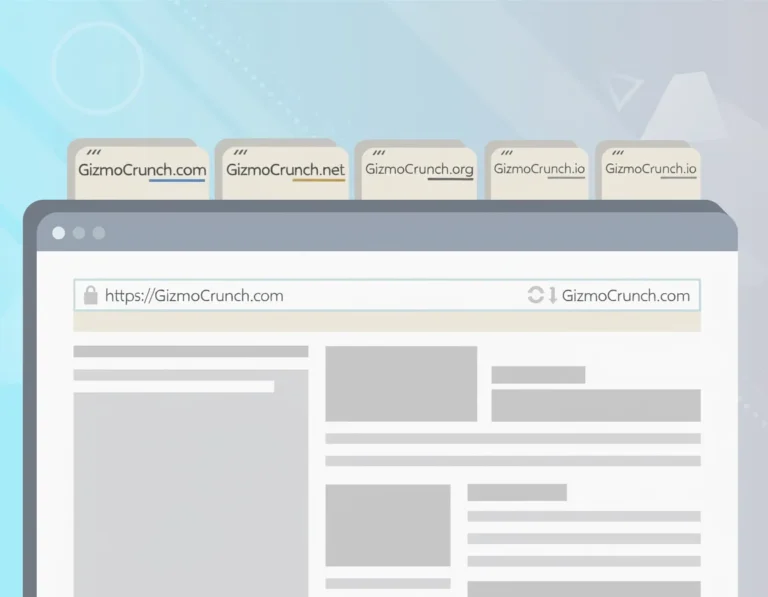
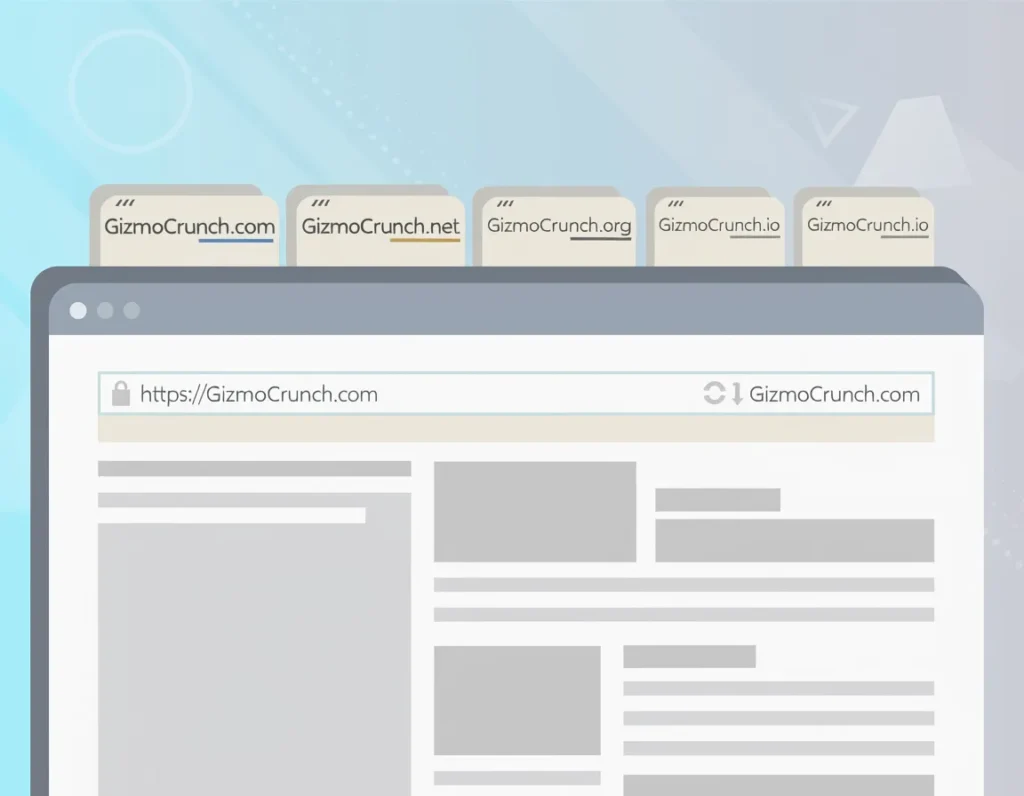
Here’s the part that’s actually driving most searches for this exact keyword. There isn’t just one gizmocrunch. There are at least three separate domains using variations of the name, and they are not the same operation.
| Domain | What it appears to be | Notable signal |
|---|---|---|
| gizmocrunch.com | The original, longer-running blog (active since ~2021) | Has an identifiable About/Contact structure and passed a basic malware/phishing scan |
| gizmocrunch.net | A separate site with near-identical, templated “what we cover” language | Content reads as generic, repetitive copy describing the platform in the abstract rather than linking to specific articles |
| gizmocrunch.org | A largely non-functional site | Returned a “we can’t find what you’re looking for” message during research for this piece |
On top of those three domains, search results are further cluttered by a wave of unrelated third-party sites publishing “What Is GizmoCrunch?” explainer articles, hosted on everything from marketing blogs to what look like university subdomains. These aren’t affiliated with GizmoCrunch at all. They’re generic content built to rank for a name that already gets search volume, a well-known tactic in low-effort content marketing.
If you’re specifically looking for the blog itself rather than an article discussing it, gizmocrunch.com is the domain with the longest track record and the most coherent site structure.
How to Spot AI-Generated “About” Content Like This
Since the gizmocrunch search results are a near-perfect case study, it’s worth naming the pattern so you can catch it elsewhere. Google itself addresses this directly in its guidance on creating helpful, reliable, people-first content, which explicitly asks creators to disclose when automation or AI played a substantial role in producing a page, precisely because undisclosed AI filler is designed to look like original reporting.
A few tells to watch for:
- Vague self-description loops. Sentences like “gizmocrunch delivers clear, engaging, and easy to understand tech coverage” repeated with minor rewording across multiple paragraphs, without ever linking to a specific article, is a strong filler signal.
- Suspiciously precise, uncited statistics. Claims like “70% of U.S. consumers influenced by online reviews” attributed loosely to a research firm and year, with no link to the actual study, should be treated as fabricated until proven otherwise.
- Contradicting founder or origin stories. When the subject’s own site says one thing and third-party coverage says another, more specific thing, the more specific version is often the invented one.
- Generic “Alternatives to X” roundups. Articles listing other obscure, similarly named sites as “alternatives” are frequently part of the same network, built to cross-link and boost each other’s rankings.
This pattern is exactly what Google’s Search Essentials documentation flags under its spam and content-quality policies: content produced primarily to attract search traffic rather than to genuinely inform a reader, and it’s a big part of why the company’s helpful content systems now evaluate this kind of behavior at a site-wide level rather than page by page.
The Bottom Line
GizmoCrunch is a real, small tech blog, not a scam and not a major outlet, sitting somewhere in the vast middle tier of the internet’s search-driven content economy. The bigger story, and the reason this specific search term is worth an article at all, is what’s grown up around it: competing domains, a non-functional copycat, and a small industry of filler explainer posts that don’t actually know who runs the site. If you came here to verify GizmoCrunch before clicking through from a search result, gizmocrunch.com is the domain with an identifiable team, a working site structure, and a clean security scan. Treat anything else claiming to be GizmoCrunch, or claiming to definitively explain it, with a healthy dose of skepticism.
5. FAQ Section
Is GizmoCrunch a legitimate website?
Gizmocrunch.com shows no active malware or phishing flags in third-party security scans and has an identifiable About and Contact structure, reasonable signs of legitimacy for a small independent blog. It is not a major, editorially staffed news outlet, so its content should be treated as a general-interest blog rather than a primary source.
Why are there multiple GizmoCrunch websites?
At least three domains (.com, .net, .org) currently use variations of the GizmoCrunch name, and they are not run by the same team. This kind of naming overlap is common when a smaller brand gains enough search visibility that copycat or opportunistic sites launch around the same keyword.
Who owns or runs GizmoCrunch?
According to its own About page, gizmocrunch.com was started by a small group of friends interested in gadgets and technology. Several third-party articles give conflicting, more specific founder claims that don’t trace back to a verifiable source, so those details shouldn’t be taken at face value.
What kind of content does GizmoCrunch publish?
Its main categories include troubleshooting and fix guides, app and software comparisons, general gadget coverage, and broader explainer-style business and tech articles, consistent with a niche, search-optimized blog rather than a breaking-news outlet.
How can I tell if an article about GizmoCrunch is trustworthy?
Check whether it links to specific GizmoCrunch articles or just describes the site in vague, repetitive terms, and be wary of precise-sounding statistics with no traceable source. Several existing “About GizmoCrunch” pieces show classic signs of AI-generated filler rather than original research.