
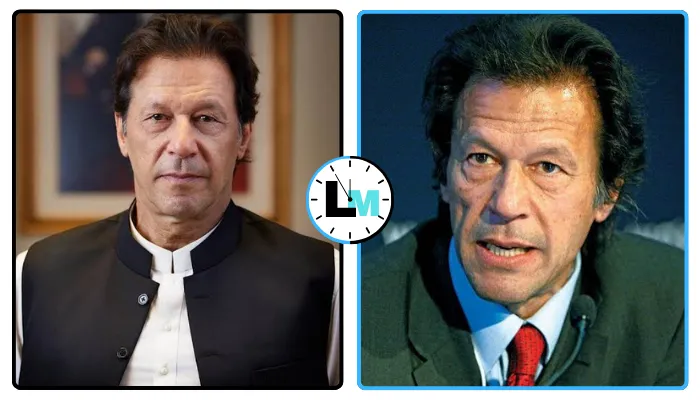

Imran Khan Net Worth 2026: The $50 Million Question Behind Pakistan’s Jailed Icon
Introduction
Imran Khan has lived several lives in one: world Cup-winning cricket captain, global playboy, philanthropist, cancer hospital founder, university builder, prime minister, and now, Pakistan’s most prominent prisoner. At 73, he has been held at Adiala Jail in Rawalpindi since August 2023, convicted in multiple corruption cases that his party and the United Nations human rights office have described as politically motivated. He faces over 180 legal cases, a staggering number that his supporters view as an attempt by the military establishment to permanently remove him from politics.
Yet for all the legal turmoil, the question of how much Imran Khan is actually worth remains surprisingly difficult to answer with precision. His net worth has been variously estimated at $50 million by the financial education platform CA Knowledge, over Rs 433 crore (roughly $15 million at current exchange rates) by Indian financial outlet Moneycontrol, and Rs 1.4 billion (approximately $5 million) based on his own election commission filings. These are not minor discrepancies. They are gaps of an order of magnitude, and they reveal something fundamental about the challenge of valuing the assets of a man whose wealth is tied up in family land, properties declared as gifts, and assets held in forms that public records do not fully capture.
Quick Facts
- Full Name: Imran Ahmed Khan Niazi
- Born: October 5, 1952, in Lahore, Pakistan
- Age (2026): 73
- Occupation: Former cricketer, philanthropist, politician, former Prime Minister of Pakistan (2018–2022)
- Cricket Career: Captain of Pakistan’s 1992 World Cup-winning team; 88 Test matches, 3,807 runs, 362 wickets
- Political Career: Founder of Pakistan Tehreek-e-Insaf (PTI), Prime Minister 2018–2022
- Marriages: Jemima Goldsmith (1995–2004), Reham Khan (2015), Bushra Bibi (2018–present)
- Children: Two sons, Sulaiman and Kasim, with Jemima Goldsmith
- Philanthropy: Founder of Shaukat Khanum Memorial Cancer Hospital (1994) and Namal University (2008)
- Legal Status: Imprisoned at Adiala Jail since August 2023; convicted in multiple corruption cases
- Estimated Net Worth (2026): Commonly cited figures range from $5 million to $50 million, depending on methodology
Early Life
Imran Ahmed Khan Niazi was born on October 5, 1952, in Lahore, into a Pashtun family of the Niazi tribe. His father, Ikramullah Khan Niazi, was a civil engineer, and his mother, Shaukat Khanum, was a homemaker who would later become the inspiration for his most enduring philanthropic legacy. He was the only son among five sisters.
The family was not wealthy in the way that Pakistan’s landed elite were, but they were comfortable and well-connected. Khan attended Aitchison College in Lahore, an elite institution that educated many of Pakistan’s future leaders, before being sent to England to complete his schooling at the Royal Grammar School in Worcester. He went on to study philosophy, politics, and economics at Keble College, Oxford, graduating in 1975.
His Oxford years were formative in more ways than one. It was there that he honed his cricketing skills, playing for the university team and catching the attention of county scouts. It was also where he began to develop the cosmopolitan outlook and comfort with Western culture that would later make him such a divisive figure in Pakistani politics.
Career
Khan made his Test debut for Pakistan in 1971 at the age of 18, but it was in the late 1970s and 1980s that he became one of the world’s premier all-rounders. His signature moment came in 1992, when he captained Pakistan to victory in the Cricket World Cup, a triumph that transformed him into a national hero. He retired from cricket that same year with 88 Test caps, 3,807 runs, and 362 wickets, a record that places him among the greatest all-rounders in the history of the sport.
After retiring, Khan turned to philanthropy. In 1994, he founded the Shaukat Khanum Memorial Cancer Hospital in Lahore, named after his mother, who had died of cancer in 1985. The hospital was Pakistan’s first comprehensive cancer center and provided free treatment to a significant proportion of its patients. It remains one of the most respected medical institutions in the country.
In 2008, he established Namal University in Mianwali, a private institution in one of Pakistan’s less developed regions. The university was designed to provide high-quality education to students from the surrounding areas, and Khan served as its chairman until January 2026, when the university removed him from the role.
Khan entered politics in 1996, founding Pakistan Tehreek-e-Insaf (PTI). For years, the party was a marginal force, winning a single seat in the 1997 elections and boycotting the 2008 polls. But Khan’s anti-corruption platform and his relentless criticism of the country’s political dynasties slowly gained traction. In 2018, PTI won the most seats in the general election, and Khan became prime minister.
His tenure was marked by ambitious promises and turbulent realities. He pursued a foreign policy that sought to reposition Pakistan away from its traditional alignment with the United States, and his government faced mounting economic challenges, including a balance-of-payments crisis that required an IMF bailout. In April 2022, he was ousted in a no-confidence vote, a moment that he and his supporters have consistently described as a conspiracy orchestrated by the United States.
Major Achievements
- 1992 Cricket World Cup victory as captain of Pakistan
- 88 Test caps for Pakistan, with 3,807 runs and 362 wickets
- Founded Shaukat Khanum Memorial Cancer Hospital (1994), Pakistan’s first comprehensive cancer center
- Founded Namal University (2008) in Mianwali
- Prime Minister of Pakistan (2018–2022)
- The United Nations Human Rights Office has raised concerns about his detention conditions
- Named among Wisden’s Cricketers of the Year (1983)
- Inducted into the ICC Cricket Hall of Fame (2009)
Business Ventures
Imran Khan’s financial affairs have always been a subject of intense scrutiny in Pakistan, and the picture that emerges from public records is more complex than the simple “rich playboy” narrative that has followed him for decades.
His most significant assets are land and property. According to election commission filings from 2018, he declared 300 kanals of land in Bani Gala, Islamabad, which he described as a gift and valued at Rs 750 million (approximately $2.6 million at the time). He also owns ancestral property in Lahore’s Zaman Park, an area of significant value, and agricultural land in Bhakkar and Mian Channu. His 2018 declaration showed total assets exceeding Rs 1.4 billion (roughly $5 million at 2018 exchange rates), a figure that has been cited repeatedly in subsequent coverage.
A more recent disclosure from 2022 put his assets at Rs 328 million, up from Rs 141 million in 2021, an increase of more than 120 per cent. The filings showed that he had acquired a luxury flat in 2021 and a commercial shop in Constitution Tower in 2022, with the shop alone valued at Rs 125 million and the flat at Rs 119 million.
What Khan does not appear to own is significant. His 2018 filings showed no personal vehicle, though he used a helicopter for official travel during his time as prime minister, at a cost of approximately Rs 1 billion between 2019 and 2021, according to a report cited by The Nation. His garage has, at various points, featured a Toyota Land Cruiser and a Mercedes Maybach S600, but these were reportedly not registered as personal assets.
His financial disclosure filings also show foreign currency holdings, including $381,000 and £7,000, along with Rs 293 lakh in domestic currency. He declared furniture worth Rs 500,000 and livestock worth Rs 200,000. His income over the three years prior to his 2018 declaration was Rs 534 lakh, and he paid Rs 1.26 crore in agricultural and Rs 339,000 in income tax.
Khan has also been associated with several business entities, though his role in most appears to be passive. He is listed as a director or board member at Pedrollo nk Ltd, a Bangladeshi company, though the nature of his involvement is unclear. His name has been linked to Halda Valley Tea Co. Ltd and Nuovo Renewable Energy Ltd, though no reliable public information is available on the extent of his holdings or the value of these interests.
Perhaps the most significant financial development of 2025 was the attempt by the National Accountability Bureau to auction his Bani Gala property as part of the Al-Qadir Trust case. An auction notice was issued in August 2025, and one of three Bani Gala properties, 405 kanals of agricultural land in Mohra Noor, was sold at Rs 3.42 million per kanal. The auction drew widespread attention and controversy, with PTI Secretary General Salman Akram Raja expressing surprise and questioning the legality of the proceedings. Reports about the auction of Khan’s actual residence were later described as baseless.
Public Image
Imran Khan’s public image has undergone one of the most dramatic transformations in modern political history. In the 1980s and 1990s, he was the quintessential celebrity: handsome, charismatic, Oxford-educated, and romantically linked to some of the most famous women in Britain, including Susannah Constantine and Jemima Goldsmith, whom he married in 1995. The British tabloids followed his every move, and he seemed to enjoy the attention.
That image began to shift as he moved into philanthropy and then politics. He positioned himself as an outsider fighting against corruption, a man of principle in a system defined by patronage. His 2018 election victory was, in part, a triumph of this narrative: millions of Pakistanis, particularly young people, saw him as a genuine alternative to the dynastic politics of the PPP and PML-N.
The image has been complicated by his legal troubles. Since his ouster in 2022 and his imprisonment in 2023, his supporters have cast him as a political prisoner, a symbol of resistance against military overreach. His party has used social media aggressively to keep his image alive, even as he remains largely incommunicado. The United Nations Working Group on Arbitrary Detention has called for his release, a development that has given his cause international legitimacy.
But his opponents paint a different picture: a man who used his office for personal enrichment, who mishandled state gifts, and who presided over a government that cracked down on dissent. The Toshakhana cases, which center on the alleged illegal sale of state gifts, have been the most damaging. In December 2025, he and his wife Bushra Bibi were sentenced to 17 years each in the Toshakhana-II case, with fines of Rs 10 million each. He had previously been sentenced to 14 years in the Toshakhana-I case and three years in an earlier gifts case.
Personal Life
Imran Khan’s personal life has been the subject of public fascination for decades. He married Jemima Goldsmith in 1995, when she was 21 and he was 42. She converted to Islam, took the name Jemima Khan, and moved to Pakistan, where she lived for nine years. They had two sons, Sulaiman and Kasim, before divorcing in 2004. Goldsmith has since built a successful career as a producer and writer, and in September 2026, she married financier Cameron O’Reilly. Khan’s sons have reportedly sought visas to visit their father in jail, though the Pakistani government has not granted them permission.
In 2015, Khan married Reham Khan, a British-Pakistani journalist, in a brief and contentious union that ended within a year. In 2018, he married Bushra Bibi, a spiritual adviser who had been his confidante for years. Bushra Bibi has been at his side throughout his legal troubles and was sentenced alongside him in the Toshakhana-II case.
Khan’s health has been a source of growing concern. In August 2026, he was moved from Adiala Jail to Shifa International Hospital in Islamabad on the orders of the Supreme Court for medical tests. His lawyers had petitioned the court, saying he was in poor health and needed examination. Earlier in 2026, he received eye treatment, and his family said at the time that he had lost most of the vision in his right eye. The court order allowing his transfer also permitted him to meet with his family once a week and speak to his sons via telephone twice weekly.
Net Worth (Estimated)
Imran Khan’s net worth in 2026 is genuinely difficult to establish with confidence. The estimates that circulate fall into three broad categories, each based on different methodologies and assumptions.
The high-end estimate comes from CA Knowledge, a financial education platform, which places his net worth at $50 million (approximately Rs 410 crore). This figure appears to value his Bani Gala property at $750 million, a valuation that seems inconsistent with the rest of the estimate and likely reflects an error or a different accounting method. Moneycontrol, citing a report from Wionews, places his net worth at over Rs 433 crore, which at current exchange rates is roughly $15 million. Neither of these estimates provides a detailed breakdown of how the figures were calculated.
The moderate estimate is based on his own election commission filings. His 2018 declaration showed assets exceeding Rs 1.4 billion, which at the exchange rate of the time was approximately $5 million. More recent filings from 2022 put his declared assets at Rs 328 million, though this appears to exclude some properties that were declared separately. These figures represent what Khan himself has declared under oath, and they are the most verifiable estimates available, though they may not capture the full extent of his assets.
The lower-end estimates that circulate in some financial tracking databases, such as Marketscreener’s figure of $86,246, are clearly not comprehensive and appear to reflect only a narrow slice of his holdings. They should be disregarded as estimates of his total net worth.
What complicates the picture further is the ongoing legal campaign against him. The National Accountability Bureau has attempted to auction his properties, and if those efforts succeed, his asset base could be significantly reduced. The Al-Qadir Trust case, in which he was convicted and sentenced to 14 years, involves allegations of corruption amounting to £190 million, though the exact financial impact on Khan personally is not clear from public records.
Editor’s Note: Net worth figures are estimates compiled from publicly available sources and may vary depending on methodology. Late Magazine does not have access to private financial records and does not present these figures as confirmed or audited.
Interesting Facts
- Khan captained Pakistan to its only Cricket World Cup victory in 1992.
- He founded Pakistan’s first comprehensive cancer hospital, Shaukat Khanum Memorial, named after his mother.
- He studied philosophy, politics, and economics at Oxford University.
- His second wife, Reham Khan, wrote a tell-all memoir after their brief marriage.
- He was removed from his position as chairman of Namal University in January 2026, the university he founded in 2008.
- He faces over 180 legal cases, a number his party describes as politically motivated.
- He has been held at Adiala Jail since August 5, 2023.
- The Islamabad High Court suspended his sentence in the Toshakhana corruption case in September 2026, though he remained in detention in connection with other cases.
- His Bani Gala property was partially auctioned in 2025, with 405 kanals of land sold at Rs 3.42 million per kanal.
- He speaks fluent English, Urdu, and Punjabi.
Legacy
Imran Khan’s legacy is being contested in real time, and it is unlikely to be settled for years, perhaps decades. On the cricket field, his place is secure: he is the greatest all-rounder Pakistan has ever produced and the captain who delivered the country’s most cherished sporting moment. As a philanthropist, his contributions are tangible and enduring. The Shaukat Khanum hospital has treated hundreds of thousands of cancer patients, many of them poor, and Namal University has provided educational opportunities in a region that had few.
His political legacy is more complicated. He mobilized a generation of young Pakistanis who had grown disillusioned with the traditional parties, and he forced corruption and accountability onto the national agenda in a way that no other politician had managed. But his government also presided over economic instability and a crackdown on press freedom, and his refusal to accept the legitimacy of his removal has contributed to a political crisis that shows no signs of resolution.
The financial legacy is perhaps the least interesting part of the story. Whether his net worth is $5 million or $50 million, it is not the measure by which he will be remembered. What matters more is what he did with the resources he had: the hospital, the university, and the political movement. And what happens to those institutions now that he is in prison and his party is under pressure? That is the real question, and it is one that no net worth figure can answer.
Frequently Asked Questions
What is Imran Khan’s net worth in 2026?
Commonly cited figures range from $5 million based on his election commission filings to $50 million based on estimates from CA Knowledge. Moneycontrol has reported a figure of over Rs 433 crore (roughly $15 million). These are estimates and should not be treated as confirmed.
Why are the estimates so different?
The wide range reflects different methodologies. The lower estimates are based on Khan’s own sworn declarations to the Election Commission of Pakistan, while higher estimates appear to include property valuations that may not reflect current market conditions or may double-count assets. No single authoritative figure exists.
What happened to Imran Khan’s Bani Gala property?
In August 2025, the National Accountability Bureau attempted to auction properties associated with Khan as part of the Al-Qadir Trust case. One of three Bani Gala properties, 405 kanals of agricultural land, was sold at Rs 3.42 million per kanal. The auction of his residence was described as baseless.
What is the Toshakhana case?
Toshakhana refers to Pakistan’s state gift repository. Khan and his wife Bushra Bibi were convicted of illegally selling state gifts and sentenced to 17 years in prison in December 2025. Khan has described the case as politically motivated.
What is the Al-Qadir Trust case?
The Al-Qadir Trust case involves allegations related to a £190 million settlement between the UK’s National Crime Agency and a Pakistani property tycoon. Khan was sentenced to 14 years in prison in this case, which he also describes as politically motivated.
Is Imran Khan still in jail?
Yes. He has been held at Adiala Jail since August 2023. In September 2026, the Islamabad High Court suspended his sentence in the Toshakhana case, but he remains in detention in connection with other cases.
Read More: Ms Rachel Net Worth 2026