
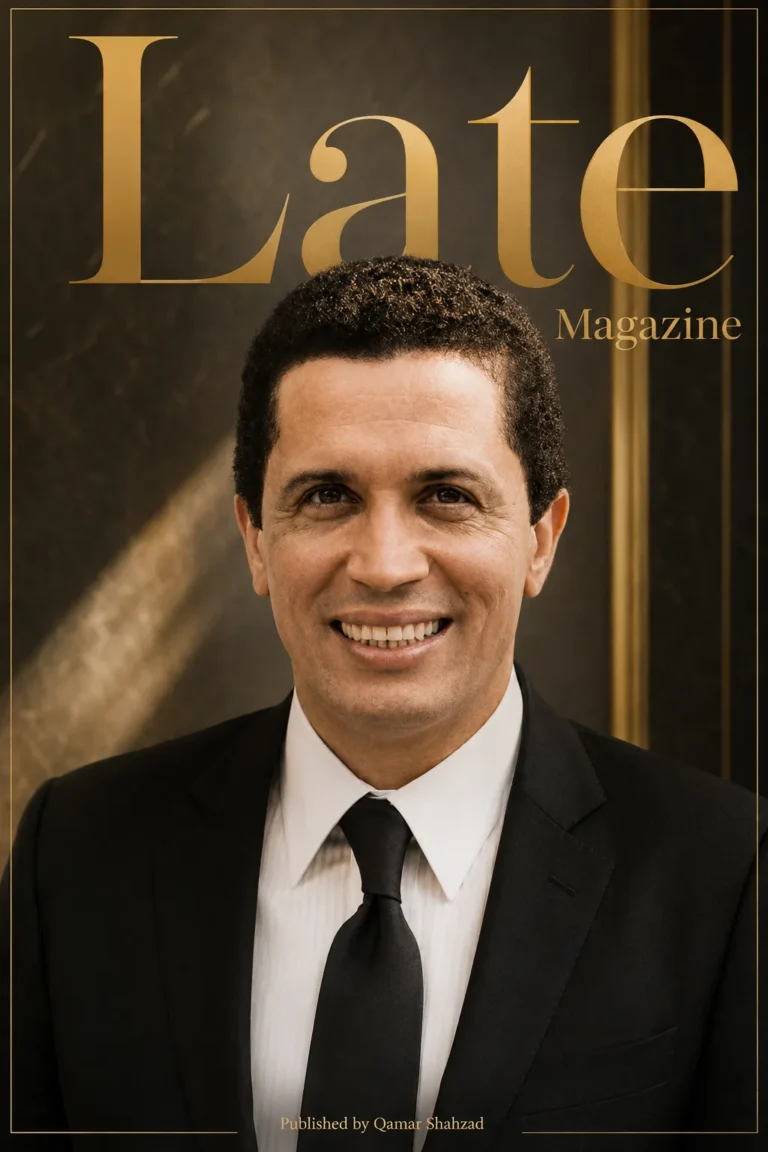

Harold Ford Sr.: The Memphis Congressman Who Built a Political Dynasty
Harold Ford Sr. spent more than two decades representing Memphis in the United States House of Representatives, becoming Tennessee’s first African American member of Congress and the founder of one of the most influential Black political families in the American South. His career combined significant legislative achievement with a high-profile federal fraud trial, and it laid the groundwork for his son, Harold Ford Jr., to later hold the same congressional seat. This article covers Ford Sr.’s early life, education, career in Congress, legal troubles, family, and life after politics.
Quick Facts
| Category | Details |
|---|---|
| Full Name | Harold Eugene Ford Sr. |
| Born | May 20, 1945, in Memphis, Tennessee |
| Profession | Politician, businessman, lobbyist |
| Party | Democratic |
| Congressional District | Tennessee’s 9th congressional district (Memphis) |
| Years in Congress | 1975 to 1997 |
| Education | B.S., Tennessee State University (1967); mortuary science degree, John A. Gupton College (1969); M.B.A., Howard University (1982) |
| Known For | First African American to represent Tennessee in Congress; founder of the Ford political family |
| Children | Five, including former Congressman Harold Ford Jr. |
| Current Status | Retired from Congress; remains active in Democratic Party affairs |
Early Life and Family Background
Harold Eugene Ford Sr. was born on May 20, 1945, in Memphis, Tennessee, and grew up on Horn Lake Road in the West Junction neighborhood of South Memphis. He was the eighth of 15 children born to Newton Jackson Ford, an undertaker, and Vera Davis Ford, a homemaker. The Ford family had deep roots in Memphis’s Black community going back generations; Ford’s great-grandfather, Newton Ford, served as a respected civic leader and elected county squire in Shelby County between 1888 and 1900.
Ford’s father built a successful funeral home business, N.J. Ford and Sons, which gave the family a wide network of community relationships that would later prove central to Harold Sr.’s political career. His younger brother, John Ford, was also politically active, later serving in the Tennessee State Senate before being convicted on federal bribery charges in 2007 as part of the Operation Tennessee Waltz investigation.
Education
Ford graduated from Geeter High School in Memphis in 1963. He went on to earn a Bachelor of Science degree from Tennessee State University, a historically Black university in Nashville, in 1967, followed by a year of graduate study there. He then completed a mortuary science degree at John A. Gupton College in Nashville in 1969, training that connected directly to his family’s funeral home business. Years later, in 1982, while already serving in Congress, Ford earned a Master of Business Administration degree from Howard University in Washington, D.C. He is also a member of the Alpha Phi Alpha fraternity.
Career Beginnings: The Family Funeral Business
After completing his education, Ford entered the family mortuary business, working as a licensed funeral director from 1969 to 1974. According to accounts of his early career, his decision to run for office was reportedly sparked by a chance meeting with a candidate for state office at the funeral home. That encounter led him to run for a seat in the Tennessee House of Representatives, marking the start of his political career.
Rise to Congress
Ford used his family’s extensive community ties, built through decades of funeral home service, to generate support for his early campaigns, particularly within Memphis’s affluent Black community. In 1974, he was elected to represent Tennessee’s 9th congressional district in the U.S. House of Representatives, taking office in January 1975. At 29 years old, he became the first African American to represent Tennessee in the United States Congress.
Congressional Career and Major Achievements
Ford went on to serve 11 terms in the House of Representatives, a tenure that sources describe as spanning either 20 or 22 years, depending on how the count is measured relative to his final term and retirement announcement. What is consistently documented is that he served from January 1975 until his retirement in January 1997. During that time, he became one of the youngest members ever to chair a subcommittee of the powerful House Ways and Means Committee, a position that allowed him to direct significant federal funding toward his Memphis district.
Ford was a consistent advocate for expanded government assistance to lower-income Americans and played an active role in debates over welfare reform throughout the early 1990s. He argued that no one in a prosperous country should be forced by economic hardship to go hungry, become homeless, or lack adequate healthcare, a position that shaped much of his legislative focus during his two decades in office.
Federal Indictment and Acquittal
Ford’s congressional career was significantly affected by a 1987 federal indictment on bank fraud charges. Prosecutors alleged that between 1976 and 1983, Ford received close to $1.5 million in loans that were, in fact, disguised bribes connected to bankers linked to Jake Butcher, a Tennessee businessman who separately pleaded guilty to bank fraud. Ford denied the charges, arguing the loans were legitimate business transactions tied to his family’s funeral home, and maintained that the prosecution was racially and politically motivated.
Congress stripped Ford of his committee leadership roles while the case proceeded, though he remained a sitting member of the House throughout the legal process. His first trial, held in Memphis in 1990, ended in a mistrial after the jury deadlocked along racial lines. Following appeals over jury selection that were twice denied, a second trial took place with a jury of 11 white jurors and one Black juror. On April 9, 1993, that jury acquitted Ford of all charges. His committee positions were restored after the acquittal.
Retirement from Congress and the Rise of Harold Ford Jr.
In 1996, Ford announced he would not seek a twelfth term in Congress. His son, Harold Ford Jr., who had been working in New York City after completing his education at the University of Pennsylvania and University of Michigan Law School, returned to Tennessee to run for the seat. Harold Ford Jr. won the 1996 election and took office in January 1997 at age 26, becoming one of the youngest members of Congress in U.S. history and the first African American to succeed a parent in Congress. He went on to represent the same 9th district for five terms, until an unsuccessful 2006 run for the U.S. Senate.
Business Ventures After Congress
Since leaving the House, Ford Sr. has worked as a lobbyist through his firm, sometimes referred to in reporting as the Harold Ford Group. His lobbying clients over the years have included automobile dealer associations seeking federal financial assistance during economic downturns. He has also remained connected to the family’s funeral home business, including reported real estate transactions tied to opening new funeral home locations in the Memphis area.
Public Image and Political Involvement
Even after leaving elected office, Ford Sr. has remained a visible figure in Tennessee Democratic politics, frequently campaigning on behalf of family members, including his son’s 2006 Senate campaign and his other son Jake Ford’s independent run for the 9th district congressional seat that same year. He has also been known for blunt, sometimes controversial public remarks on religion and local politics during campaign appearances.
Family and Personal Life
Ford married Dorothy Bowles in 1969, and the couple had three children: Harold Ford Jr., Newton Jake Ford, and Sir Isaac Ford. They divorced in 1999. Ford later married Michelle Roberts, with whom he has two additional children, Andrew and Ava. In total, Ford is the father of five children. He is a member of the Baptist faith. He currently divides his time between Tennessee, Florida, and the Hamptons in New York, according to available reporting.
Legacy and Influence
Harold Ford Sr.’s legacy rests on two connected achievements: breaking a significant racial barrier as Tennessee’s first Black member of Congress, and establishing a multi-generational political family that continued to shape Memphis and Tennessee politics long after his own retirement. His use of the Ford family’s community standing, built originally through the family funeral business, to launch and sustain a congressional career became a template that his son and other family members would later follow into elected office. His two-decade tenure on the House Ways and Means Committee also left a lasting mark on how federal resources flowed into his Memphis district during a critical period of the city’s development.
Frequently Asked Questions
Who is Harold Ford Sr.? Harold Ford Sr. is a former U.S. Congressman who represented Tennessee’s 9th congressional district from 1975 to 1997. He was the first African American to represent Tennessee in Congress.
How is Harold Ford Sr. related to Harold Ford Jr.? Harold Ford Jr. is his son. Harold Ford Jr. succeeded his father in the same 9th district congressional seat in 1997 and served until 2007.
Was Harold Ford Sr. convicted of a crime? No. He was indicted on federal bank fraud charges in 1987, but a jury acquitted him of all charges in 1993 following a lengthy legal process that included one earlier mistrial.
How long did Harold Ford Sr. serve in Congress? He served 11 terms, from January 1975 to January 1997. Sources describe this span as either 20 or 22 years depending on how the terms are counted.
What does Harold Ford Sr. do now? He has worked as a lobbyist since leaving Congress and remains active in Democratic Party affairs, while also maintaining ties to the family’s funeral home business.
Does Harold Ford Sr. have other children besides Harold Ford Jr.? Yes. He has five children total: Harold Ford Jr., Newton Jake Ford, and Sir Isaac Ford from his first marriage to Dorothy Bowles, and Andrew and Ava from his marriage to Michelle Roberts.
Conclusion
Harold Ford Sr.’s career reflects both the opportunities and the obstacles faced by early Black political leaders in the American South. From building on his family’s funeral home business to becoming Tennessee’s first African American congressman, surviving a high-profile federal indictment, and ultimately passing his congressional seat to his son, Ford Sr.’s story is inseparable from the broader history of the Ford political family in Memphis. His two decades in Washington helped shape both federal policy on poverty assistance and the political landscape of Tennessee for a generation that followed.
Read More: Lucy Southworth Biography: Career, Family & Net Worth