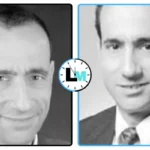


Dr. Atul Butte: The Physician-Scientist Who Turned Big Data Into Medicine
In the rapidly evolving world of biomedical research, few figures were as influential, or as widely respected, as Dr. Atul Butte. A pediatrician by training and a pioneer in biomedical informatics by vocation, Butte spent his career proving that the vast oceans of publicly available data could be harnessed to discover new drugs, reclassify diseases, and ultimately improve patient care. He was a professor, an entrepreneur, a mentor, and a visionary who believed that data, properly used, could transform medicine. When he died in June 2025 at the age of 55 after a two-and-a-half-year battle with cancer, the scientific community lost one of its most original and generous minds. This is his story.
Quick Facts
| Attribute | Details |
|---|---|
| Full Name | Atul Janardhan Butte |
| Born | August 26, 1969, in Philadelphia, Pennsylvania |
| Died | June 13, 2025 (aged 55) |
| Nationality | American |
| Education | Brown University (BA, MD); Harvard-MIT Division of Health Sciences and Technology (PhD) |
| Known For | Pioneer of biomedical informatics; founding director of UCSF’s Bakar Computational Health Sciences Institute |
| Occupation | Physician-scientist, professor, entrepreneur |
| Spouse | Gini Deshpande |
| Children | One daughter |
Early Life and Education
Atul Janardhan Butte was born on August 26, 1969, in Philadelphia, Pennsylvania, to Janardhan Butte and Mangala Butte. His path to becoming one of the most influential figures in biomedical data science began with an unusual combination of interests: computer science and medicine.
He attended Brown University, where he studied computer science as an undergraduate. But he was also part of the university’s Program in Liberal Medical Education, which guaranteed him acceptance to Brown’s Alpert Medical School. He earned both his bachelor’s degree and his MD in 1995.
Butte then completed a residency in pediatrics and a fellowship in pediatric endocrinology, both at Children’s Hospital Boston. But his ambition extended beyond clinical practice. In 2004, he completed a PhD from the Harvard-MIT Division of Health Sciences and Technology, supervised by Dr. Isaac Kohane.
Career
Stanford University
In 2005, Butte moved to California and became an assistant professor at Stanford University. Over more than a decade at Stanford, he pioneered methods to mine publicly available genomic and biomedical data to uncover novel therapies and reclassify diseases. He rose to become Chief of the Division of Systems Medicine and held positions as associate professor of pediatrics, computer science, immunology, and rheumatology.
During his Stanford years, Butte published a pair of landmark papers in Science Translational Medicine. His team found genetic “signatures” for 100 different diseases based on the genes they activated, then looked at how 164 FDA-approved drugs could counteract those signatures. This work inspired the founding of NuMedii, a company dedicated to finding new uses for existing drugs.
UCSF and the Bakar Institute
In 2015, Butte moved to the University of California, San Francisco, where he became the inaugural director of the Institute for Computational Health Sciences, which later became the Bakar Computational Health Sciences Institute (BCHSI). Under his leadership, the institute grew to include 90 affiliated faculty members, and UCSF became a global hub for artificial intelligence, informatics, and translational science.
He also served as the Chief Data Scientist for the entire University of California Health System, representing all six UC academic medical centers.
A Visionary Mentor
Butte was renowned not just for his research but for his mentorship. Marina Sirota, now acting director of BCHSI, highlighted the institute’s growth under Butte’s directorship and the sharing of clinical data across the UC system. He inspired a generation of trainees to pursue translational and clinical bioinformatics.
He was known for his vivid lectures. At the beginning of every talk, he proudly displayed a disclosures slide packed with the names and logos of the many companies he was working with. He mastered the TED Talk, disarming audiences with personal stories, like how he used his Fitbit to lose 50 pounds.
Entrepreneurship
Butte was a serial entrepreneur who believed that collaborating with industry was the best way to get academic discoveries to patients. He co-founded three investor-backed, data-driven companies:
- Personalis: A cancer genomics and personalized test maker that went public in 2019.
- Carmenta: A preeclampsia diagnostics company acquired by Progenity in 2015.
- NuMedii: A company that uses big data to find drug candidates and predictive biomarkers, led by Butte’s wife, Gini Deshpande.
He was an inventor on 24 patents and received royalty payments through Stanford University for several patents licensed to NuMedii and Personalis.
Major Achievements
- Pioneer of translational bioinformatics: Founded the field as a young faculty member at Stanford
- Founding director of UCSF’s Bakar Computational Health Sciences Institute: Built it into a global hub for computational health sciences
- Chief Data Scientist for UC Health: Oversaw data strategy for all six UC academic medical centers
- Elected to the National Academy of Medicine (2015): One of the highest honors in medicine
- Elected to the American Academy of Arts and Sciences (2025): Recognized for exceptional career contributions
- Morris F. Collen Award of Excellence (2024): The highest honor in biomedical informatics
- White House Champion of Change (2013): Recognized by the Obama Administration for promoting open science
- Author of nearly 300 papers: One of the most highly cited researchers in his field
Business Ventures
Butte’s business ventures were an extension of his academic mission. He co-founded three companies and held equity in them. While exact values are not publicly available, his stake in Personalis (which went public in 2019) and his royalty payments from Stanford-licensed patents represent significant assets.
His wife, Gini Deshpande, served as CEO of NuMedii, further intertwining his family and professional life.
Public Image
Butte was widely regarded as a charismatic exponent of the power of technology to improve medicine. His humility, infectious enthusiasm, and sunny optimism made him a beloved figure in the scientific community. UCSF Chancellor Sam Hawgood said, “It’s a rare person who leaves their mark on the university like Atul.”
He was recognized by colleagues for his generosity and his commitment to open data and data sharing throughout his career.
Personal Life
Butte lived in Menlo Park, California, with his wife, Gini Deshpande, a cancer biology and biotechnology entrepreneur, and their daughter. He was known for his passion for his family and his work.
He died on June 13, 2025, at the age of 55, after a two-and-a-half-year battle with cancer. His passing was mourned by the entire UC system and the broader scientific community.
Net Worth (Estimated)
Publicly available estimates of Dr. Atul Butte’s net worth are not available. As a public university professor, his salary is a matter of public record, but his equity holdings in private companies and his royalty income are not publicly disclosed.
According to public records, Dr. Butte’s salary at the University of California in 2024 was $920,238**, including a base salary of $355,330 and other pay of $564,908. His total pay and benefits were **$992,628. His salary grew from $854,456 in 2022 to over $920,000 in 2024.
His wealth was primarily derived from:
- University salary: Over $900,000 per year at UCSF
- Equity in Personalis: A publicly traded company (IPO 2019)
- Equity in NuMedii and Carmenta: Private biotechnology companies
- Royalty payments: From Stanford University for patents licensed to NuMedii and Personalis
While his exact net worth is not known, his combination of a high university salary, equity in a publicly traded biotech company, and royalty streams suggests a net worth in the millions. However, no reliable estimate is available.
Editor’s Note: Net worth figures are estimates compiled from publicly available sources and may vary depending on methodology. Late Magazine does not have access to private financial records and does not present these figures as confirmed or audited.
Interesting Facts
- Dual career: He was both a trained pediatric endocrinologist and a computer scientist
- Fitbit user: He lost 50 pounds using a Fitbit and spoke about it in his TED Talk
- Open science champion: Recognized by the Obama Administration for promoting open data
- Serial entrepreneur: Co-founded three companies while working as a full-time professor
- Family partnership: His wife, Gini Deshpande, led NuMedii, one of the companies he co-founded
- Enduring legacy: The Atul Butte Awards Program was established in 2026 to honor his legacy
Legacy
Dr. Atul Butte’s legacy is one of transformation. He changed how the University of California approaches data, championing open data sharing and computational health sciences. He changed how scientists think about drug discovery, proving that existing drugs could be repurposed for new diseases using publicly available data. And he changed the lives of the many trainees he mentored.
In 2026, the inaugural Atul Butte Awards Program was announced, honoring his legacy by recognizing student researchers and early-stage precision medicine startup founders. The Atul Butte Company Competition now recognizes innovation in precision medicine.
Butte’s vision of a healthcare system driven by data and computation lives on in the institutions he built and the people he inspired.
Frequently Asked Questions
Who was Dr. Atul Butte?
Dr. Atul Butte was an American biomedical informatician, pediatrician, and biotechnology entrepreneur. He was the Priscilla Chan and Mark Zuckerberg Distinguished Professor at UCSF and the founding director of the Bakar Computational Health Sciences Institute.
What was Dr. Atul Butte’s net worth?
Publicly available estimates of his net worth are not available. His university salary in 2024 was over $920,000, and he held equity in several biotech companies, but his exact net worth is not publicly known.
How did Dr. Atul Butte die?
He died on June 13, 2025, at the age of 55, after a two-and-a-half-year battle with cancer.
What companies did Dr. Atul Butte found?
He co-founded three companies: Personalis (cancer genomics), Carmenta (preeclampsia diagnostics), and NuMedii (drug repurposing).
What is the Bakar Computational Health Sciences Institute?
It is a research institute at UCSF founded by Dr. Butte in 2015, dedicated to using computational methods and big data to advance health sciences. It grew to include 90 affiliated faculty members under his leadership.
What is the Atul Butte Awards Program?
Established in 2026, the Atul Butte Awards Program honors his legacy by recognizing student researchers and early-stage precision medicine startup founders at UCSF’s AI Research Day and the Precision Medicine World Conference.
Read More: Dave Yonce Net Worth: Entrepreneur & Inventor’s Fortune