
Zhao Wei Net Worth 2026: The Billion-Dollar Fortune Frozen in Legal Limbo
Introduction
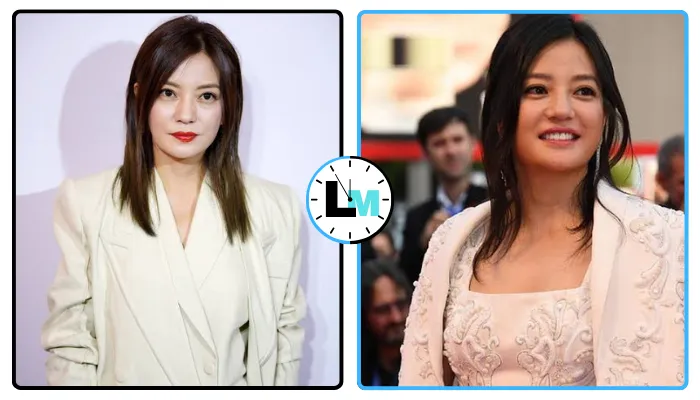
Zhao Wei was once the most recognizable face in Chinese entertainment. She was “Xiao Yanzi,” the mischievous princess in My Fair Princess, a role that made her a household name across Asia. She was also, for a time, one of the most successful celebrity investors in China, a woman who turned a fortune from acting into a multi-billion-dollar portfolio that earned her the nickname “female Warren Buffett.” In 2026, at 50, she sits at the top of lists ranking the world’s wealthiest actors, with an estimated fortune of around £744 million, or roughly $1 billion, according to a ranking compiled by The Scotsman and reported by the Daily Express. Yet she cannot access most of it.
Her estimated net worth is a figure that has been reported with remarkable consistency in international media, but it is also a figure that tells only part of the story. Her wealth is real, but it is frozen. Court-ordered equity freezes have locked up more than 16 million yuan (approximately $2.2 million) across multiple companies. She has been blacklisted from the Chinese entertainment industry since 2021, her films and television shows removed from streaming platforms. Her attempts to return to public life, including a surprise appearance on a livestream in early 2026, were shut down within minutes. Understanding Zhao Wei’s net worth in 2026 means understanding a fortune that exists on paper but is largely inaccessible in practice.
Quick Facts
- Full Name: Zhao Wei 赵薇)
- Also Known As: Vicky Zhao, Vicki Zhao
- Born: March 12, 1976, in Wuhu, Anhui Province, China
- Age (2026): 50
- Occupation: Actress, singer, director, businesswoman
- Key Roles: My Fair Princess (1998), Romance in the Rain (2001), Shaolin Soccer (2001), Red Cliff (2008), Dearest (2014)
- Directorial Debut: So Young (2013), which grossed over 700 million yuan
- Education: Beijing Film Academy (Bachelor’s in Performance, Master’s in Directing)
- Ex-Husband: Huang Youlong (married 2008, divorced 2021, announced 2024)
- Daughter: Huang Xin (nicknamed “Xiao Siyue”), born 2010
- Estimated Net Worth (2026): Approximately $1 billion, though much of it is frozen or inaccessible
Early Life
Zhao Wei was born on March 12, 1976, in Wuhu, Anhui Province, China. Her father was an engineer and her mother a teacher. She showed an early aptitude for performance, and after graduating from high school, she enrolled at the Beijing Film Academy, one of the most prestigious film schools in China. She was admitted with the highest entrance examination score in the country, a distinction that foreshadowed a career defined by exceptional achievement.
Her breakout came in 1998 with My Fair Princess, a television drama in which she played Xiao Yanzi, a streetwise orphan who becomes a princess. The show was a phenomenon, and Zhao Wei became an overnight star. She followed it with Romance in the Rain (2001), another massive hit, and made the transition to film with Shaolin Soccer (2001), directed by Stephen Chow, and Red Cliff (2008), directed by John Woo.
Career
Zhao Wei’s acting career spanned more than two decades and included some of the most commercially successful Chinese films and television dramas of her era. She appeared in approximately 49 films and television series and released seven studio albums. In 2013, she made her directorial debut with So Young, a coming-of-age drama that grossed over 700 million yuan and established her as a director of commercial significance.
But her career was never limited to entertainment. In 2014, she and her then-husband Huang Youlong purchased a 9.18 percent stake in Alibaba Pictures for HK$3.1 billion, making her the company’s second-largest shareholder. They sold portions of their stake in 2015 and 2016, reportedly netting over HK$2 billion in profit. The move earned her the “female Warren Buffett” nickname and transformed her from a wealthy actress into a genuine capital markets player.
In 2016, however, her fortunes reversed. Longwei Media, a company she controlled with only 60 million yuan in capital, announced a plan to acquire 29.14 percent of Wanjia Culture for 3.06 billion yuan, a deal that relied on 51 times leverage. The acquisition collapsed, and in 2018, the China Securities Regulatory Commission fined Zhao Wei and Huang Youlong 300,000 yuan each and banned them from the securities market for five years. The ruling triggered hundreds of investor lawsuits, many of which remain unresolved.
In August 2021, Zhao Wei was added to the Chinese government’s list of “morally bankrupt” artists, a designation that triggered a comprehensive blacklist. Her films and television shows were removed from streaming platforms, her name was deleted from credits, and her social media accounts were suspended. She has not appeared in a major film or television production since.
Major Achievements
- Star of My Fair Princess, one of the most-watched Chinese television dramas in history
- Directorial debut: So Young grossed over 700 million yuan (approximately $100 million)
- Second-largest shareholder of Alibaba Pictures at the peak of her investment career, with a 9.18 percent stake purchased for HK$3.1 billion
- Reported profit of over HK$2 billion from her Alibaba Picture investment
- Owned four French vineyards, including Château Monlot in Bordeaux, purchased for approximately €4 million
- Starred in approximately 49 films and television series and released seven studio albums
- Named “World’s Richest Actor” in 2026 rankings, with an estimated fortune of £744 million ($1 billion)
Business Ventures
Zhao Wei’s business portfolio was once among the most diversified of any Chinese celebrity’s. She held stakes in at least 17 companies spanning film, entertainment, investment, technology, and real estate. At its peak, her personal and family assets were valued at approximately 5.66 billion yuan (around $800 million at the time), according to disclosures made during the failed Wanjia Culture acquisition.
Her most valuable assets are her real estate holdings. She owns a 3,000-square-foot sea-view villa in Singapore, purchased for HK$30 million, intended for her daughter’s education. She also owns luxury properties in Beijing and Shanghai, with early reports valuing them at over 200 million yuan combined. Public records show she once owned seven luxury homes across Beijing, Shanghai, and Singapore, with a total value exceeding 200 million yuan. Some reports suggest she owns a villa in Beijing’s Shunyi district valued at over 300 million yuan.
Her French vineyard portfolio was another significant asset. She purchased Château Monlot in Bordeaux’s Saint-Émilion region in 2011 for approximately €4 million. The estate spans 7 hectares and produces around 50,000 to 80,000 bottles of wine annually. She later acquired three additional vineyards, bringing her total holdings in the region to around 87 hectares. The vineyards have continued to operate despite her blacklist, though reports suggest her ex-husband transferred some of these assets before their divorce.
Her equity holdings have been the source of her most significant legal troubles. In 2026, three of her companies saw their equity frozen by court order: Xizang Longwei Cultural Media (1.9 million yuan), Hebao Entertainment Group (5 million yuan), and Wuhu Dongrunfa Investment (9 million yuan). The total frozen equity exceeds 16 million yuan. These freezes stem from a 2017 guarantee she provided for an 18-billion-yuan trust plan, which went into default. The Wuhu Dongrunfa freeze was extended in March 2026 and will remain in place until March 2029.
Her commercial footprint has shrunk dramatically. Of the 16 companies she was once associated with, only 10 remain in operation, and several of those have minimal staffing. Wuhu Dongrunfa has only two employees listed; Hebao Entertainment Group has one.
Public Image
Zhao Wei’s public image has undergone one of the most dramatic reversals in Chinese entertainment history. In the late 1990s and 2000s, she was a beloved national icon, a symbol of the aspirational, upwardly mobile China that was emerging. Her turn to business and her success in the capital markets only enhanced her reputation. She was celebrated as a woman who had transcended the limitations of her industry.
That image collapsed in 2021. Her blacklisting was met with widespread speculation about its causes, though no official explanation was ever provided. Some analysts linked it to her securities violations, others to a 2001 magazine shoot in which she wore a dress resembling the Japanese imperial flag, and still others to her association with powerful business figures who had fallen out of favor. The Chinese government’s “Clear and Bright” campaign against celebrity culture and capital disorder provided the broader context.
Since 2021, Zhao Wei has largely disappeared from public view. She has made occasional appearances on social media, including a photo of a 30-year reunion with her Beijing Film Academy classmates in May 2026, which showed her looking somewhat tired but smiling. In March 2026, she discreetly attended a screening of Honey Needle, a film she had directed a decade earlier that was finally released under a different director’s name. She was photographed wearing a baseball cap, removing it after the film to greet the audience. The film grossed less than 4.5 million yuan on its opening day.
Her most notable attempt at a comeback came on New Year’s Eve 2025, when she appeared unannounced on a livestream for her own wine brand. The appearance briefly boosted sales, but the stream was shut down after approximately ten minutes. State media subsequently published commentary criticizing “morally bankrupt” artists for attempting to circumvent blacklist restrictions.
Personal Life
Zhao Wei married Huang Youlong, a Chinese businessman, in 2008. Their daughter, Huang Xin, nicknamed “Xiao Siyue,” was born in Singapore in 2010. The marriage began to deteriorate after the 2017 securities scandal, and the couple separated in 2018 before finalizing their divorce in 2021. Zhao Wei publicly confirmed the divorce in December 2024, stating that her marriage to Huang had been legally dissolved years earlier and that “any matter, statement, or news report concerning him has nothing to do with me.”
The divorce was not financially straightforward. Reports suggest Huang Youlong transferred significant assets, including some of the French vineyards, to associates before the divorce was finalized, leaving Zhao Wei with fewer assets than she might have been entitled to. She also remained liable for guarantees she had provided for his business dealings. Huang Youlong faces his own legal troubles, including a HK$753 million debt claim from a Macau casino operator related to a gambling spree in which he lost 283 million yuan over six days in 2015.
Her daughter, now 16, has been educated at elite institutions, including an international school in Hong Kong and a Swiss boarding school reportedly costing tens of thousands of dollars per year. Zhao Wei has kept her largely out of the public eye, though photographs have occasionally circulated showing a tall, slender teenager who is said to resemble a K-pop idol.
Net Worth (Estimated)
Zhao Wei’s net worth in 2026 is most commonly estimated at around £744 million, or approximately $1 billion, according to rankings published by The Scotsman and reported by international media including the Daily Express. That figure would make her the richest actor in the world, ahead of Arnold Schwarzenegger and Shah Rukh Khan. GuruFocus, a financial data platform, estimates her net worth at over $490 million, based on her disclosed holdings in Shanghai INT Medical Instruments. A Vietnamese financial publication estimated her wealth at $500 million.
The wide range of these estimates reflects a fundamental problem: much of Zhao Wei’s wealth is either illiquid, frozen, or difficult to value. The $1 billion figure appears to be based on the peak value of her Alibaba Pictures stake, her real estate portfolio, her French vineyards, and her other investments. It does not account for the equity freezes, the litigation liabilities, or the fact that she has been unable to earn income from her primary profession since 2021.
Her 2016 asset disclosure, filed during the Wanjia Culture acquisition, provides the most detailed picture of her finances at their peak. At that time, her combined assets with Huang Youlong were valued at 5.66 billion yuan (approximately $800 million at 2016 exchange rates). This included 4.52 billion yuan in listed company stock, 666 million yuan in real estate, and the remainder in operating businesses and other holdings. Since then, the stock holdings have been sold or depreciated, the real estate market has fluctuated, and her earning power has been eliminated.
The most accurate characterization of Zhao Wei’s net worth may be that it is “theoretical.” She possesses assets of significant value, but they are not generating income, and many of them are legally locked. Her equity in three companies is frozen until at least 2029. Her ability to sell or transfer her properties is constrained. And her blacklist status means she cannot monetize her fame through endorsements, performances, or new productions. The world’s richest actress, in other words, may be cash-poor.
Editor’s Note: Net worth figures are estimates compiled from publicly available sources and may vary depending on methodology. Late Magazine does not have access to private financial records and does not present these figures as confirmed or audited.
Interesting Facts
- She was admitted to the Beijing Film Academy with the highest entrance examination score in the country.
- Her directorial debut, So Young, grossed over 700 million yuan (approximately $100 million).
- She purchased Château Monlot in Bordeaux for approximately €4 million in 2011 and later acquired three additional vineyards.
- She was once the second-largest shareholder of Alibaba Pictures, behind only Alibaba Group itself.
- Her 2016 Wanjia Culture acquisition attempt relied on 51 times leverage, with only 60 million yuan in own capital for a 3.06 billion yuan deal.
- She was banned from the Chinese securities market for five years in 2018.
- Her 2021 blacklisting led to the removal of all her films and television shows from Chinese streaming platforms.
- She appeared on a livestream in December 2025 for approximately ten minutes before it was shut down.
- Her daughter was born in Singapore and has attended elite international schools in Hong Kong and Switzerland.
- She has donated millions to charity over her career, including a 300,000 yuan fund for scholarships in her hometown of Wuhu.
Legacy
Zhao Wei’s legacy is one of extraordinary achievement and equally extraordinary reversal. She was the most successful actress of her generation in China, a woman who transcended the traditional boundaries of her industry to become a genuine player in the world of high finance. Her investment in Alibaba Pictures was one of the most profitable celebrity investments in history. Her fortune, at its peak, was estimated at over 5 billion yuan.
But her story is also a cautionary tale about the limits of celebrity and the consequences of ignoring regulatory boundaries. The Wanjia Culture acquisition was a gamble that violated securities laws and destroyed the trust of thousands of investors. The blacklist that followed was not merely a punishment for that transgression; it was a symbol of a broader shift in China’s attitude toward celebrity culture and capital.
At 50, Zhao Wei is a woman of considerable wealth but limited freedom. She can still be photographed at class reunions and movie screenings. She still owns vineyards in France and apartments in Singapore. But she cannot act, cannot perform, cannot leverage her fame into new income. Her net worth is, in a sense, a monument to what she once had and what she can no longer do.
Frequently Asked Questions
What is Zhao Wei’s net worth in 2026?
International rankings place her net worth at approximately £744 million (around $1 billion), based on the peak value of her assets. GuruFocus estimates it at over $490 million. These figures should be treated as estimates, as much of her wealth is either illiquid or frozen by court order.
Why was Zhao Wei blacklisted?
She was added to China’s list of “morally bankrupt” artists in August 2021. The government has never provided an official explanation, but the blacklisting followed her 2018 securities violation, a 2001 magazine shoot in which she wore a dress resembling the Japanese imperial flag, and the broader “Clear and Bright” campaign against celebrity culture.
What happened to her Alibaba Pictures investment?
She and Huang Youlong purchased a 9.18 percent stake in Alibaba Pictures in 2014 for HK$3.1 billion, becoming the company’s second-largest shareholder. They sold portions of their holdings in 2015 and 2016, reportedly earning over HK$2 billion in profit.
Why are her assets frozen?
Her equity in three companies was frozen by court order in 2025 and 2026, stemming from a guarantee she provided for an 18-billion-yuan trust plan that went into default in 2021. The Wuhu Dongrunfa freeze was extended in March 2026 and will remain until March 2029.
Is Zhao Wei still married to Huang Youlong?
No. They separated in 2018, finalized their divorce in 2021, and Zhao Wei publicly confirmed the divorce in December 2024.
Has Zhao Wei tried to make a comeback?
Yes. She appeared on a livestream for her wine brand on New Year’s Eve 2025, but it was shut down after about ten minutes. She also discreetly attended a screening of a film she had directed in March 2026.
Read More: George Clooney Net Worth 2026