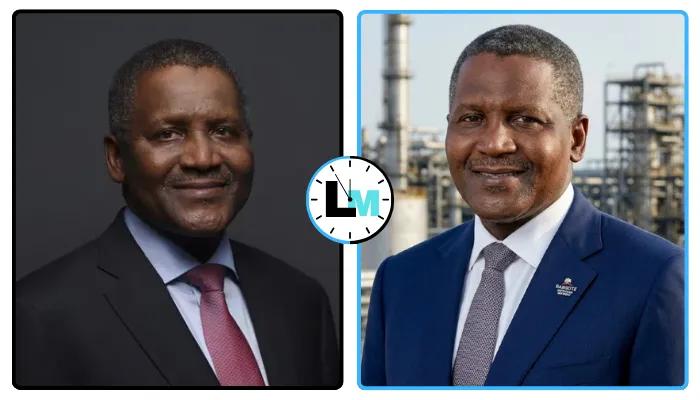

Aliko Dangote Net Worth 2026: Inside the $51 Billion Refinery IPO
Introduction
Aliko Dangote has spent nearly five decades building the kind of business empire that Africa had never seen before, a conglomerate spanning cement, sugar, fertilizer, and now oil refining. In September 2026, he did something no African industrialist had done: he opened his $20 billion oil refinery to public ownership through the continent’s largest-ever initial public offering, raising $1.6 billion from retail investors across Africa. The move triggered a stunning surge in his personal fortune, which jumped by roughly $20 billion in a single day to $51.3 billion, according to Forbes’ real-time billionaire tracker.
The listing is the culmination of a bet Dangote made more than a decade ago, when he announced plans to build the world’s largest single-train refinery on swamp land outside Lagos. Many thought it impossible. The project faced years of delays, cost overruns, and political resistance. Now it supplies more than 70 percent of Nigeria’s energy consumption and has transformed the country from an importer of refined oil into an exporter. For Dangote, 69, the IPO is not just a financial milestone. It is a statement about who should own Africa’s wealth. “Selling these shares now is us making sure that we create wealth for other people,” he told Forbes ahead of the listing. “Just like what Amazon and Microsoft have done. That kind of thing but for an African company.”
Quick Facts
- Full Name: Aliko Dangote
- Born: April 10, 1957, in Kano, Nigeria
- Age (2026): 69
- Occupation: Founder and President of Dangote Industries Limited
- Key Businesses: Dangote Cement, Dangote Refinery, Dangote Sugar, Dangote Fertilizer
- Education: Capital High School, Kano; Al-Azhar University, Cairo (business studies)
- Family: Three daughters (Mariya, Halima, and Fatima) from two marriages; one adopted son
- Residence: Lagos, Nigeria (same home for 36 years)
- Notable Recognition: Africa’s richest person for over a decade; largest single-train refinery in the world
- Estimated Net Worth (September 2026): $51.3 billion, according to Forbes
Early Life
Aliko Dangote was born on April 10, 1957, in Kano, Nigeria’s second-largest city and a historic trade hub that had been a commercial crossroads since the 10th century. His family was part of that commercial tradition. His grandfather, Sanusi Dantata, was a wealthy commodities trader who dealt in grain, oats, and rice across the Sahel. His mother, Hajiya Mariya Sanusi Dantata, was also a member of the Dantata dynasty. Dangote’s father, Mohammed Dangote, was a businessman and politician.
Dangote’s parents divorced when he was young, and he was raised primarily by his grandfather, who instilled in him a businessman’s instinct early. At just 8 years old, he used his allowance to buy sweets and recruited other children to sell them in exchange for a cut of the profits. “When you are raised by an entrepreneurial parent or grandparent, you pick that aspiration,” he told Forbes in a previous interview. “It makes you be much more aggressive, to think anything is possible.”
He attended Capital High School in Kano and later studied business at Al-Azhar University in Cairo, though he has said he was not a bookish student. His real education came from watching his grandfather negotiate deals and from his own early trading ventures.
Career
Dangote began his business career in 1978, at age 21, with a loan of roughly 500,000 naira from his uncle. That seed capital bought him a trading outfit for cement and rice, commodities he would later come to dominate on an industrial scale. He incorporated Dangote Industries as a trading firm, importing cement, sugar, rice, and textiles.
In the 1980s and 1990s, he began investing the profits from trading into manufacturing, starting with sugar refining and, crucially, cement production. In 1991, he founded Dangote Cement, which would become the engine of his fortune. At the time, Nigeria imported most of its cement. Dangote saw an opportunity: build plants domestically, produce at scale, and undercut imports. In 2007, with backing from the World Bank and Nigeria’s then-president Olusegun Obasanjo, he secured a $5.6 billion loan to fund a massive expansion of cement capacity. The bet paid off. Dangote Cement became Africa’s largest cement producer, operating in ten countries with a market capitalization that placed Dangote among the world’s wealthiest people.
The refinery was the next frontier. Announced in 2013 with an initial estimated cost of $19 billion, the Dangote Petroleum Refinery and Petrochemicals was built on reclaimed swamp land in the Lekki Free Zone near Lagos. Construction required moving 65 million cubic meters of sand. It started production in 2024, reached full capacity of 650,000 barrels per day in 2026, and now operates at approximately 700,000 barrels per day. The refinery plans to expand to 1.4 million barrels per day by 2029, which would make it the world’s largest refinery, surpassing India’s Jamnagar facility.
Major Achievements
- Africa’s richest person for over a decade, consistently ranked by Forbes and Bloomberg
- Dangote Refinery: The world’s largest single-train oil refinery, supplying more than 70% of Nigeria’s energy consumption
- Dangote Cement: Africa’s largest cement producer, operating across multiple countries
- Africa’s largest-ever IPO: The Dangote Refinery’s $1.6 billion public offering, launched September 2026
- Grand Commander of the Order of the Niger (GCON): Nigeria’s second-highest national honor
- Forbes Africa’s Person of the Year (2026): For his role in reshaping the continent’s industrial landscape
- Aliko Dangote Foundation: One of Africa’s largest philanthropic organizations, with an endowment of $1.25 billion
Business Ventures
The Dangote Refinery now accounts for the majority of Dangote’s wealth, more than his cement, fertilizer, and sugar businesses combined. The refinery’s implied valuation after the private placement reached $42 billion, and the public offering values it at approximately $47.6 billion. Dangote retains 87 per cent ownership following the listing. The refinery plans a $14.3 billion expansion to double capacity to 1.4 million barrels per day by 2029, and Dangote has said he will pursue a secondary listing on an international exchange after that expansion is complete.
Beyond Nigeria, Dangote is pursuing a second refinery in Kenya’s Lamu region, with a cost estimated between $15 billion and $17 billion. He has offered East African countries a combined 30 per cent equity stake in the project, with Kenya considering a 10 per cent stake worth roughly $500 million. Construction is expected to begin by the end of September 2026, with completion targeted for 2030. Rwanda has also expressed interest in acquiring a stake.
Dangote Cement remains the group’s other pillar. In Q1 2026, the company posted a profit of $233.8 million, up 53 per cent from a year earlier. In August 2026, Dangote signed an $800 million memorandum of understanding with Sinoma International Engineering to expand the Itori cement plant to 12 million tonnes per annum, part of a broader $1 billion expansion plan across Africa.
The group also operates Dangote Sugar, one of Nigeria’s largest sugar producers, and Dangote Fertilizer, which is expanding into Zambia with investments in solar and thermal power. Dangote has projected that the group is on track to generate $30 billion in total revenue by the end of 2026, up from $25 billion in the previous year.
Public Image
Dangote’s public image is that of an industrialist first and a billionaire second. He has repeatedly used his platform to call for increased local production and backward integration across Africa. In September 2026, during an interview with ARISE News, he criticized wealthy Africans for buying private jets while failing to invest in factories. “What I see is people now owning aircraft all over the place, flying all over, and they don’t have one single factory,” he said. “So it means that they’re not actually helping in growing the economy, and that has to change.”
The refinery’s move to dollar-denominated fuel pricing in July 2026 drew sharp criticism in Nigeria, where the federal government’s naira-for-crude arrangement had been designed to insulate motorists from currency volatility. BusinessDay reported that Dangote halted all naira-based fuel sales and moved to dollar pricing, citing a mismatch between dollar-denominated crude inputs and naira-denominated product sales. The decision was described as effectively weakening the naira-for-crude deal brokered by President Bola Tinubu’s government in 2024.
Dangote has largely avoided direct political commentary, positioning himself as a champion of African industrialization rather than a political actor. His philanthropy, channeled through the Aliko Dangote Foundation, has focused on health, education, nutrition, and humanitarian relief. In July 2026, his daughter Halima disclosed that the family had agreed to dedicate one-third of Dangote’s estate to philanthropy under his succession plan.
Personal Life
Dangote has been married twice, both marriages ending in divorce. He has three daughters: Mariya, Halima, and Fatima, all of whom hold senior positions within the Dangote Group. He also has an adopted son but has made clear that his daughters are the ones he expects to lead the business.
In September 2026, he spoke openly about succession during an interview with ARISE News. Asked whether he could see one of his daughters leading the group, he said, “I think, yes, I can see one of them. I’ve been watching all of them, so I can see definitely one of the three that can actually lead.” On the question of a male heir, his answer was unambiguous. “Even if I had a son, I don’t think the son would have done better than these three daughters that I have.”
Dangote has said he still lives in the same Lagos home he has occupied for 36 years and has no plans to move. “Once I come in in the evening, it’s difficult to take me out of my house,” he said. He acquired his first private aircraft at around age 22 but told ARISE News that he had lost interest in personal luxury as his priorities shifted toward building productive assets. “There’s nothing that I’ve not seen,” he said.
Net Worth (Estimated)
Aliko Dangote’s net worth in 2026 is not a settled figure, and the discrepancy between the major wealth trackers is unusually wide. According to Forbes’ real-time billionaire tracker, his fortune stood at $51.3 billion as of September 14, 2026, up from $25.6 billion at the end of 2025 and $28.5 billion on Forbes’ 2026 Africa Billionaires list published in March. The surge followed the refinery’s $2.5 billion private placement, which was oversubscribed and raised $3.7 billion, and the launch of the public offering.
The Bloomberg Billionaires Index, which uses a different methodology, put Dangote’s net worth at $35.3 billion on the same day, though Bloomberg projected his wealth could rise to as much as $58.2 billion following the IPO’s completion. The gap between Forbes and Bloomberg, roughly $16 billion, reflects the inherent difficulty of valuing a fortune concentrated in a single, privately controlled asset.
The refinery alone accounts for the majority of Dangote’s wealth. The public offering values the refinery at approximately $47.6 billion, and Dangote retains 87 per cent ownership. His other major holdings include his stake in Dangote Cement, his sugar and fertilizer businesses, and the Aliko Dangote Foundation’s endowment. The group is projected to generate $30 billion in revenue by the end of 2026.
The trajectory of Dangote’s wealth has been volatile in 2026. He began the year with a fortune of around $25.6 billion. By June, it had risen to $36.5 billion, making him wealthier than the projected annual economic output of 33 African countries. The private placement pushed it past $50 billion, and the public IPO triggered further gains. Whether those gains hold will depend on the refinery’s aftermarket trading performance, which is expected to begin on the Nigerian Stock Exchange in November 2026.
Editor’s Note: Net worth figures are estimates compiled from publicly available sources and may vary depending on methodology. Late Magazine does not have access to private financial records and does not present these figures as confirmed or audited.
Interesting Facts
- Dangote began his business career in 1978 with a 500,000 naira loan from his uncle, selling cement and rice.
- He was raised primarily by his grandfather, a wealthy commodities trader, who taught him to think like a businessman from age 8.
- His refinery was built on swamp land that required 65 million cubic meters of sand to reclaim.
- He has lived in the same Lagos home for 36 years.
- He acquired his first private jet at around age 22 but now criticizes other wealthy Africans for spending on aircraft instead of factories.
- His three daughters, Mariya, Halima, and Fatima, all hold senior positions within the Dangote Group and are positioned to lead the company.
- The Dangote Refinery is the fourth Dangote Industries subsidiary to go public in Nigeria.
- He has pledged one-third of his estate to philanthropy through the Aliko Dangote Foundation.
Legacy
Aliko Dangote’s legacy is being defined in real time, and the refinery IPO is its centerpiece. He has already built the largest cement company in Africa, a fertilizer business that supports farmers across the continent, and now the largest single-train oil refinery in the world. But the IPO is something more: it is an attempt to democratize ownership of Africa’s industrial assets, to let ordinary Nigerians and Africans own a stake in the continent’s economic future.
His succession plan is equally deliberate. Rather than leaving the empire to a male heir or dividing it among his children, he has structured the transition around professional governance and a philanthropic mandate. He has said he wants the company run “professionally” and has cited Microsoft and Apple as models of businesses that outlived their founders. “We want to make sure that we make it very difficult for any family member to come and destroy anything,” he said.
His broader legacy, as he describes it, is industrialization. “What I want to leave as a legacy is to industrialize Africa,” he said. “I cannot do it alone, but I’m 100% sure in the next two, three years, other Africans will join.” Whether they do or not, Dangote has already shown what is possible when an African industrialist bets on his own continent.
Frequently Asked Questions
What is Aliko Dangote’s net worth in 2026?
Forbes’ real-time billionaire tracker listed his fortune at $51.3 billion as of September 14, 2026. Bloomberg’s Billionaires Index put it at $35.3 billion on the same day, with a projection that it could reach $58.2 billion. The gap reflects different methodologies for valuing his privately held assets, particularly the refinery. These figures are estimates and should not be treated as confirmed.
What is the Dangote Refinery IPO?
The Dangote Petroleum Refinery and Petrochemicals launched Africa’s largest-ever initial public offering on September 14, 2026, offering 4.1 billion shares at 525 naira each to raise approximately $1.6 billion. The offer closes on October 13, and shares are expected to begin trading on the Nigerian Stock Exchange in November 2026.
Who will succeed Aliko Dangote?
Dangote has said his three daughters, Mariya, Halima, and Fatima, are all capable of leading the Dangote Group. He has stated that having a male heir is “not my priority” and that even if he had a son, “I don’t think the son would have done better than these three daughters.”
Why did Dangote switch fuel sales to dollars?
Dangote Petroleum Refinery stopped selling petrol, diesel, and jet fuel in naira in July 2026, citing a mismatch between dollar-denominated crude inputs and naira-denominated product sales. The decision effectively weakened the naira-for-crude arrangement brokered by the Nigerian government in 2024.
What is the Aliko Dangote Foundation?
The foundation was established in 1994 and is one of Africa’s largest philanthropic organizations. It received an endowment of $1.25 billion and has since attracted an additional $700 million in funding. Dangote has pledged one-third of his estate to the foundation as part of his succession plan.
Is Dangote building a refinery in Kenya?
Yes. Dangote plans to build a $15 to $17 billion refinery in Kenya’s Lamu region, with construction expected to begin by the end of September 2026 and completion targeted for 2030. He has offered East African countries a combined 30 percent equity stake in the project.
Conclusion
Aliko Dangote’s financial story in 2026 is one of transformation. In a single year, his fortune has more than doubled, driven not by a lucky break but by a bet he made more than a decade ago and a listing he spent years preparing. The refinery IPO is the largest share sale in African history, and it has turned Dangote into one of the 40 wealthiest people on the planet.
But the more significant story is what he is building beyond the balance sheet. He is constructing a refinery in Kenya, expanding cement production across the continent, and structuring a succession plan that prioritizes professional governance and philanthropy over dynastic inheritance. He has spent 36 years in the same house, lost interest in private jets, and talks about industrializing Africa the way other billionaires talk about legacy. At 69, Dangote is not winding down. He is building something designed to outlast him.
Read More: Kaley Cuoco Net Worth 2026